
An Ocean Silver Travertine kitchen island can connect a kitchen island and backsplash through linear vein-cut patterning, provided the homeowner accepts natural stone care and the fabricator approves the complete assembly. Honed and filled describes appearance and surface treatment; it does not make travertine acid-proof or maintenance-free.
Begin with the travertine slab gallery and review the proposed batch photographs. The travertine collection provides a wider material-family reference; related names do not guarantee identical slabs.
Identify the supplied material
The supplied Ocean Silver Travertine is identified as vein-cut, honed and filled, 2 CM, code BV. Confirm the allocated slab dimensions, treatment and usable areas before releasing drawings. The measurements for one batch should not be applied to another without confirmation. Inspect honed and filled travertine slabs in person; a 2 cm travertine kitchen countertop still needs a project-specific support design.
Decide whether the island or backsplash leads
A strongly banded island can be the main feature while the backsplash is quieter, or the wall can carry the most expressive section. Review the chosen slabs next to cabinetry and under the intended lighting. For a vein cut travertine backsplash, compare broad wall panels with the waterfall travertine island before allocating the most expressive bands. The generated kitchen image is design inspiration, not a photograph of a completed DOMVS project.
Create one drawing for tops, returns and wall panels
Identify which part of each slab becomes the worktop, waterfall return and backsplash. A travertine slab cutting layout should mark joints, edge assemblies, appliance openings and tap penetrations. Do not promise uninterrupted pattern across a corner until the actual slab sequence and cutting layout support that intention.
Use the DOMVS material catalogs for an initial specification conversation and discuss custom sizes and finish options when standard formats do not fit the drawings. Confirm feasibility for the actual material before promising a detail.
Coordinate support before fabrication
Have the fabricator and cabinet team resolve the substrate, supports, cutouts, overhangs and handling plan. A 2 CM label does not establish an acceptable unsupported span. Apparent edge thickness in a design image may come from an assembly. Keep the final detail tied to the selected slabs and the actual cabinetry.
Choose with the household's habits in mind
Natural stone kitchen planning starts with food preparation, drink service and cleaning expectations. Discuss travertine kitchen maintenance with the client before choosing the slab. Use cutting boards and heat protection as appropriate to the approved care plan. Where the owner expects an unchanged surface with little attention, compare other material categories before approval rather than overselling travertine.
Ten design benefits to evaluate
These are conditional design opportunities based on the supplied appearance and the proposed application. They are not tested strength, traction, environmental or maintenance claims.
1. Vein-cut layers give the island a clear directional composition.
2. Honed appearance offers a lower-sheen choice for a room with abundant daylight.
3. Filled surface treatment can provide a smoother visual field than an unfilled example, while the actual finish still needs inspection.
4. A selected slab can become a distinct kitchen focal point.
5. Grey and tan tones can connect stone to oak cabinetry.
6. A related backsplash can reduce the number of competing surface patterns.
7. A waterfall return can bring the material into views from an adjacent room.
8. A cutting layout lets the team place the preferred pattern on the most visible face.
9. Custom edge assemblies can develop the desired visual proportions when properly supported.
10. The same palette can inform a residential kitchen, hospitality suite, retail demonstration kitchen or commercial client lounge, subject to separate hygiene and use requirements.
Care and material tradeoffs
Acidic foods can alter calcium-carbonate stone. Review suitable cleaning and protection methods before selecting travertine for an active kitchen; sealing is not a substitute for that decision.
For supporting technical context, consult the Natural Stone Institute guidance and the project-specific supplier instructions. Do not infer exterior, submerged, steam-shower or floor-traction suitability from this interior image.
If the selected stone does not suit the brief, compare the wider natural stone slab gallery and the separate porcelain slab category. Porcelain is manufactured; do not describe it as natural travertine. Check the current arrivals gallery for selection options, then verify the allocated inventory.
Frequently asked questions
Does filled mean stain-proof?
No. Confirm the actual fill and treatment, and follow the supplier's care advice.
Can every waterfall return match the top?
No. Pattern relationships depend on the actual slabs and the cutting plan.
Is this a commercial food-preparation approval?
No. The operator and project team must confirm the applicable hygiene and material requirements.
Bring the specification to the project team
For Los Angeles travertine kitchen design, review samples alongside the cabinets. For travertine slabs, nationwide shipping arrangements, the delivery address and unloading access should be confirmed with the supplier. DOMVS describes nationwide service on its complimentary consultation page. Professional teams can review the Design Trade Program and request samples, project pricing and technical information with drawings and quantities. No current stock quantity or lead time is promised here.
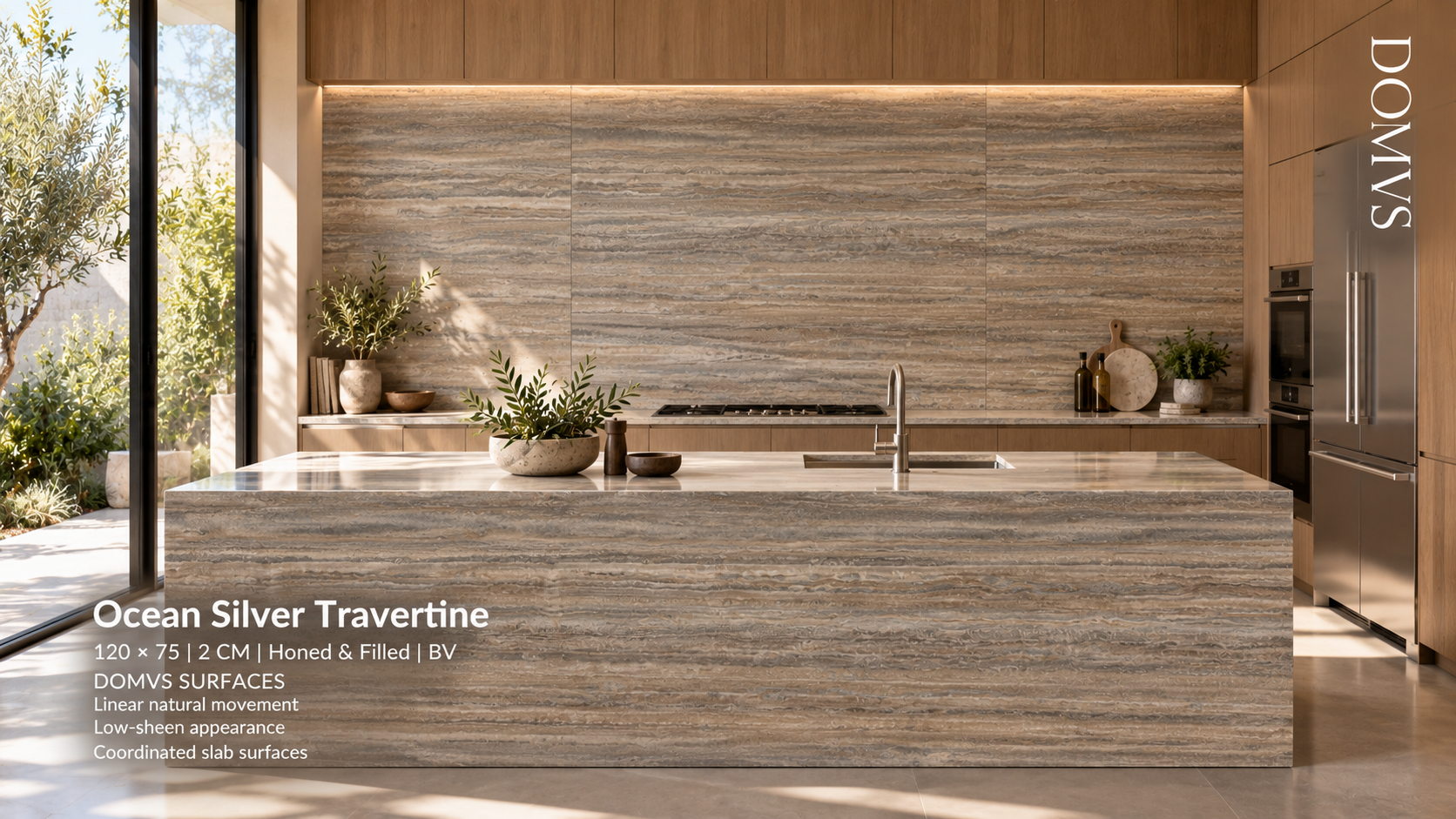
Generated installation inspiration based on the supplied Ocean Silver Travertine slab photograph; not a completed DOMVS project. Confirm allocated slabs, support, fabrication and kitchen care requirements.