
A leathered basalt retail wall should support the merchandise, not compete with it. The supplied reference shows fine pebbled black texture, distinct from the smoother honed and coarser flamed alternatives. Black Basalt Brick Veneer is confirmed in2×24IN units, with3/8IN and3/4IN thickness options. This is a wall veneer design guide, not evidence of floor suitability.
Use raking light as a design variable
Light close to a wall can make small surface changes more noticeable. Whether that effect suits a jewelry or clothing boutique is a sample decision. Assemble a leathered basalt mock-up with the proposed joint color, then compare diffuse light, the actual wall light and the customer’s viewing direction. Do not assume a textured finish hides dust or makes cleaning unnecessary.
The interior designer should review the wall with the merchandise palette. The lighting designer and architect should coordinate fixture position, mounting and service access. Compare larger basalt formats only as separate products; a slab specification does not approve this veneer.
Ten design benefits to evaluate in the mock-up
These are conditional design and coordination opportunities, not performance ratings.
Fine surface contrast. The leathered reference’s fine pebbled texture can contrast with smooth display glass when sampled together.
A dark merchandise backdrop. Charcoal material can frame pale objects without a second wall color.
A long module rhythm. The2×24IN format offers a12:1 proportion for coordinating shelves and display bays.
Lighting control. A mock-up can reveal the amount of texture emphasis created by raking light.
Joint-color coordination. Grout samples can be evaluated as part of the feature rather than chosen after the stone.
Close-view character. Fine texture can be reviewed at customer distance, not just in a room-wide image.
Two thickness choices. The3/8IN and3/4IN options allow interface comparisons without a universal installation claim.
Focused retail placement. A selected display wall can carry the material while other surfaces remain calmer.
Maintenance access planning. The lighting and shelving layout can be drawn around safe access for the approved dust routine.
A reusable approval record. A retained finish sample and lighting photograph give later merchandising changes a clear reference.
Set the joint and display layout together
Preserve the long narrow12:1 module in elevations. Coordinate the bond pattern, corners and cut units around shelves rather than leaving small infill pieces to chance. Fine joints in an inspiration image are not a prescribed grout width: confirm the installed detail with the stone and installation-system suppliers.
Resolve display fixings into an appropriate backing rather than assuming the veneer can carry shelves. The general contractor should coordinate the substrate and service openings with the responsible designers. Discuss the scope through custom capabilities and keep the approved panel with catalog references.
Approve a dust routine without promising dust resistance
A leathered wall’s texture is a visual choice; no dust-resistance or easy-clean rating has been established here. Ask the supplier and operator to agree suitable tools, cleaner if needed, access and frequency. Trial the proposed routine on the sample, checking the dry result under the final lighting. Avoid abrasive tools or improvised strong chemicals.
The Natural Stone Institute care guidance supports appropriate stone cleaners and cautions that excess cleaner can leave a film. This general advice does not replace instructions for the selected finish, joint and any treatment. Record the routine so store staff know when to seek specialist advice.
Think beyond opening day: repositioned shelving can expose different light and access conditions. Keep the approved finish and joint sample for future merchandising work rather than relying on an old screen image.
Check the assembly independently of the finish name
The3/8IN and3/4IN thickness options are confirmed product choices, not interchangeable solutions for every substrate. Coordinate attachment, edges, movement provisions, corners and backing with the project team. Manufacturer wall-system resources show the broader assembly approach; they do not select an adhesive or certify this exact veneer.
Questions for the retail team
Does leathered mean the wall will conceal dust?
No product-specific evidence supports that promise. Evaluate the actual sample and agree the maintenance routine. A finish can look different under strong directional light; approval should use the intended fixture.
Should the wall light be as close as possible?
Not automatically. Compare the desired merchandise emphasis with the texture effect and fixture service requirements. A lighting mock-up should guide placement, not a generic distance taken from a photograph.
Can veneer support display shelves?
Do not assume it. The shelf and backing design require their own support and fixing details. The DOMVS FAQ can frame initial questions, while material collections and current arrivals can support comparison.
Bring merchandising, lighting and operations to one review
Retail teams in New York, Chicago, Miami, Denver, San Francisco or Utah can use the same sample-based process with their local contractor. These are coordination examples, not local project or performance claims. A developer should retain the agreed care and finish record; a landscape architect proposing an exterior adaptation needs a separate assessment.
Discuss the sample through the design trade programme, arrange a complimentary design consultation, or request leathered Black Basalt Brick Veneer samples and a project quote.
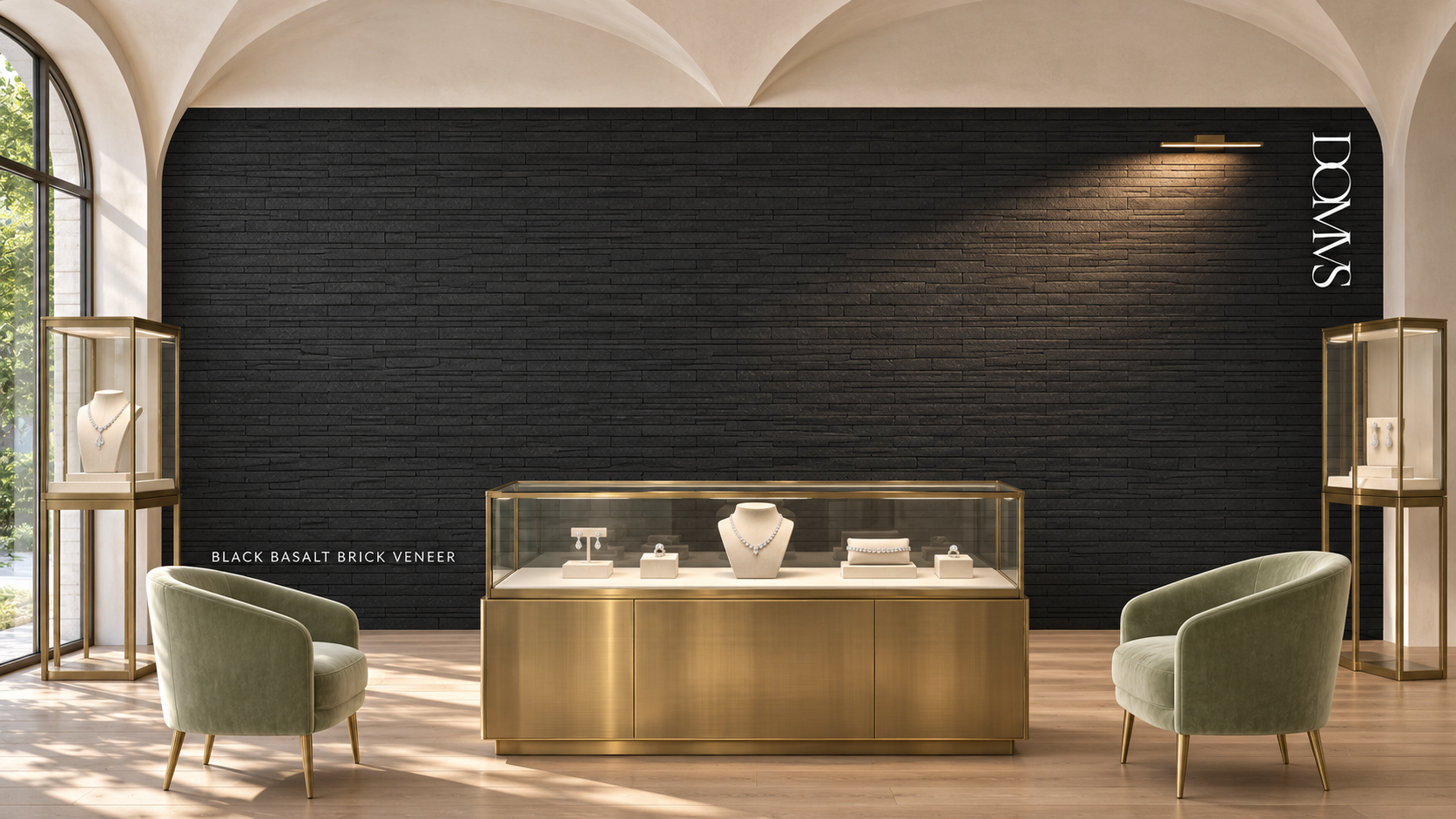
Generated original interior wall design concept. Material, attachment and intended exposure require project-specific approval; not a completed DOMVS project.